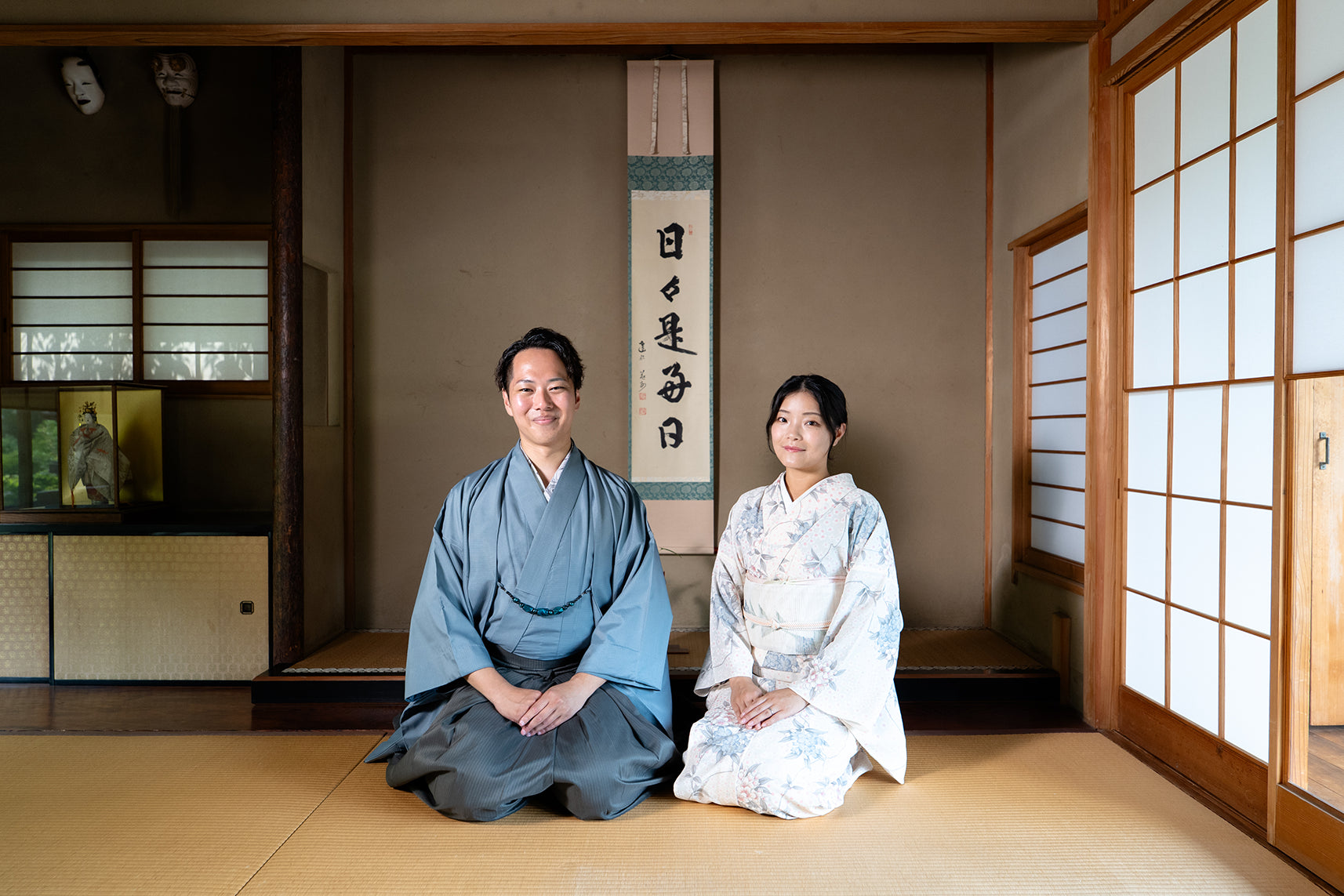
Complete Guide to Shinkagé-Ryu Hōgan-ha
(The Wakizashi & Tantō Online Lessons)
In our online lessons, we train in the rare and refined techniques of Shinkagé-Ryu Hōgan-ha.
This article is a complete, easy-to-follow guide covering everything you should know before and while you train—written especially for practitioners.
Whether you’re new to the style or already training, we hope you’ll enjoy reading this from start to finish.
① The Relationship Between Shinkagé-Ryu Hōgan-ha and Asayama Ichiden-ryu Hyoho

The term Hōgan refers to a historical title once held by high-ranking samurai officials.
In other words, Shinkagé-Ryu Hōgan-ha is said to have been practiced by samurai of elevated status.
Until relatively recently, it existed as an independent ryuha. However, the final headmaster was unable to find a successor. As a result, the tradition was entrusted to Osaki Sensei, the 21st headmaster of Asayama Ichiden-ryu Hyoho, who was also a close friend.
After recognizing many shared principles between the two schools, Osaki Sensei chose to preserve Shinkagé-Ryu Hōgan-ha for the future. Today, it is transmitted as a betsuden (a separate, specially preserved lineage) within Asayama Ichiden-ryu Hyoho.
② Key Characteristics of Shinkagé-Ryu Hōgan-ha

Because this school was practiced by high-ranking samurai, its equipment and appearance are quite distinctive.
- Kaishi (folded paper) are kept in the chest
- An inrō is worn at the right waist
- The sword is worn without a sageo
- The sageo is folded and stored inside the chest instead
Unlike battlefield-based schools such as Asayama Ichiden-ryu Hyoho, training is generally done with the sword worn in an inner belt, not an outer one.
However, for standing uchigatana techniques, the previous generation—Osaki Sensei and Seki Sensei—updated the curriculum so that training with an outer belt is also possible.
Training focuses mainly on uchigatana, wakizashi, and tantō, but the ryuha also preserves many extremely rare forms, including:
- Sageo (katana cord) Iai
- Gamaza (zabuton) Iai
- Tenugui (hand towel) Iai
These unusual practices reflect a samurai mindset: never being caught off guard, no matter the situation:
Fighting Katana with a Cushion (and Other Items You Never Knew You Could Fight With)
③ Reiho (Etiquette) in Shinkagé-Ryu Hōgan-ha
Shinkagé-Ryu Hōgan-ha has a form of reiho that is very different from Asayama Ichiden-ryu Hyoho (Mubiryu Iaijutsu).
The etiquette is highly ceremonial, strongly influenced by the lifestyle and formal attire of high-ranking samurai.
Understanding this reiho is an essential part of truly studying the ryuha.
④ Standing Uchigatana Kata
Shinkagé-Ryu Hōgan-ha contains 18 standing uchigatana kata.
Many of these kata are built around very specific and unique themes, such as:
- Performing vertical upward cuts to both front and rear
- Fighting four opponents using only a reverse grip
- Drawing the sword with the left hand while it remains at the waist
Each kata has a clear concept, making this section both challenging and intellectually rewarding.
⑤ Seated Uchigatana Kata
There are 13 or more seated uchigatana kata in the tradition.
Currently, 13 kata are practiced in the online lessons.
A key focus is being able to draw instantly, regardless of whether the sword is placed on the left or right side.
This training develops adaptability and awareness in confined or unexpected situations.
⑥ Wakizashi Techniques
Shinkagé-Ryu Hōgan-ha includes 13 wakizashi kata.
- The first 4 kata begin with the wakizashi worn at the waist
- The remaining 9 kata begin with the wakizashi placed on the floor
⑦ Tantō Techniques
The tradition also preserves 13 tantō kata.
Even Seki Sensei, with over 50 years of budo experience, describes tantō techniques as “extremely rare.”
Because the weapon is short, many techniques are bold and dynamic, incorporating taijutsu (body movement) alongside weapon use.